
When Everybody Got the Joke
We Used to Speak the Same Language

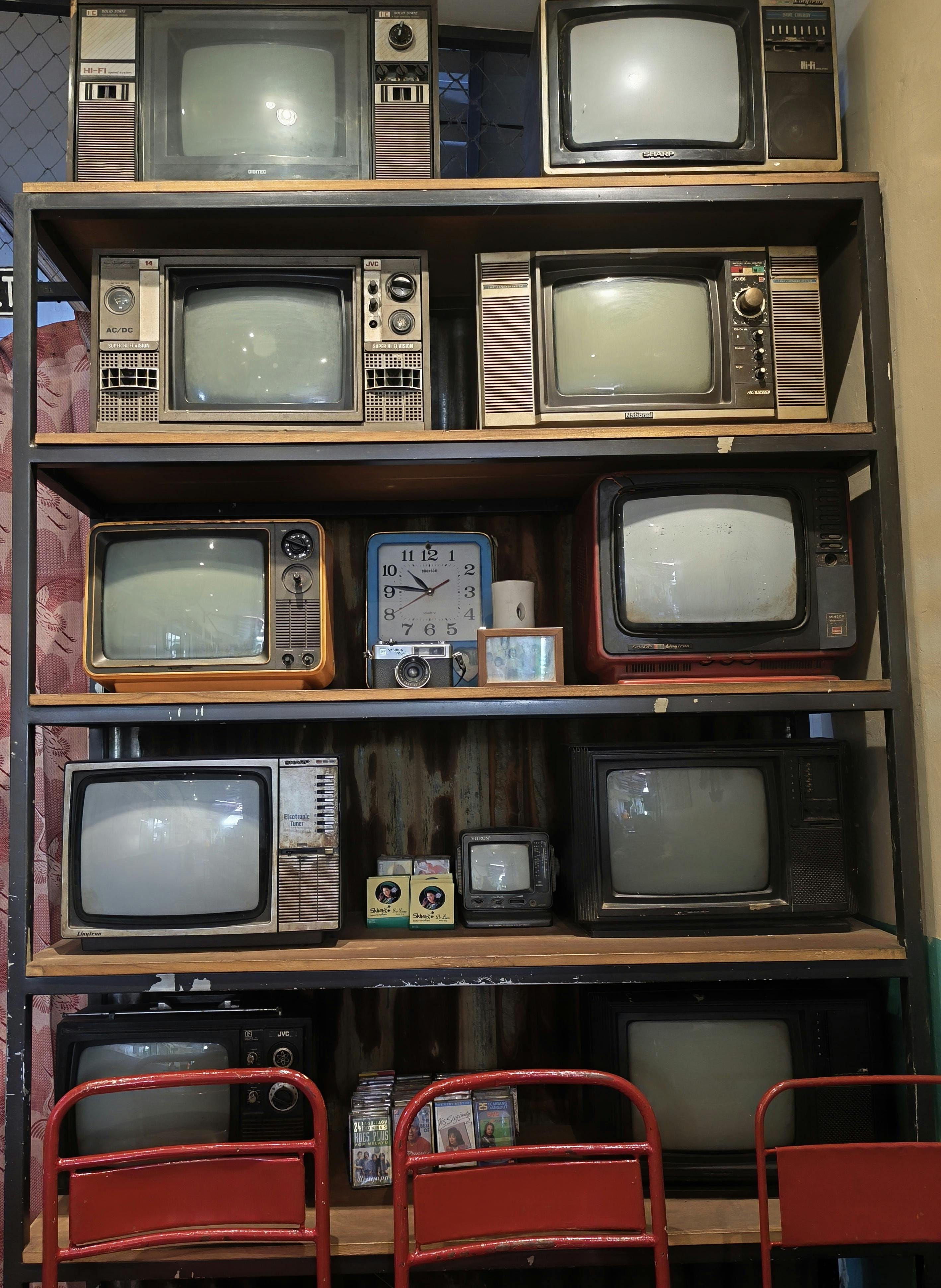
I used to believe in the monoculture the way people believed in landline phones—permanent, reliable, and so embedded in daily life it was impossible to imagine a world without one.
So when my kids were young and impressionable, I made sure they got a proper cultural diet.
A little Looney Tunes.
Some Star Trek.
A healthy dose of The Three Stooges.
And, because I wanted them to understand that intelligence and nonsense can occupy the same space, The Adventures of Rocky and Bullwinkle and Friends.
When they asked why—and they eventually did, usually mid eye-boink—I told them:
“These are our cultural touchstones. The rest of your life will point back to these.” That felt true then. It sounded like something an adult who had the weight of inherited wisdom would say. Turns out, inherited wisdom is just false certainty wearing a Member’s Only jacket.
There was a time when most people were pulling from the same cultural shelf.
You could walk into a room, make a reference, and not have to explain it like a footnote in a college paper. The joke landed because the audience already had the setup.
But more than shared cultural vocabulary, those old shows snuck in life lessons while you were laughing.
Bugs Bunny taught us the joke was usually on the system, not the outsider. Authority figures were pompous, hunters were idiots, and the smartest person in the room was often the unassuming guy eating a carrot.
Half the country grew up watching opera parodies, drag disguises, and chaotic identity swaps before breakfast cereal and somehow survived just fine.
Spock represented a time when we shared not merely references, but questions.
What does it mean to be human? Can logic guide us? Where do we belong? How do we balance duty with emotion?
Star Trek was philosophy wearing pointed ears.
And somehow we managed to explore identity, difference, tolerance, and belonging without turning every conversation into a loyalty test.
The Three Stooges weren’t just slapstick. They were a warning label—and the reason modern instructions read like a legal document written for someone holding a toaster near a bathtub.
The Adventures of Rocky and Bullwinkle and Friends wasn’t just a cartoon. It was satire wearing a paper hat and pretending to be harmless. Beneath all the bad puns, flying squirrels, and villains named things like Boris Badenov was a steady drumbeat of jokes about government, media, politics, and authority.
Long before most of us understood what satire even was, that show was teaching us an important lesson: Adults are making this up as they go along.
The reason it worked is because the jokes operated on two levels at once. Kids laughed because a moose had crashed through another wall. Adults laughed because the narrator sounded exhausted by civilization itself.
Probably most importantly, Rocky and Bullwinkle taught an entire generation to side-eye official answers before we even had the vocabulary for skepticism.
I am not saying the old shows were better, I loved Animaniacs and Rugrats. Freakeazoid! was awesome. The difference was coverage. Fewer channels. Fewer choices. More overlap. I grew up in a market with seven channels; most folks had three.
We could speak to each other without a translator. Mostly.
I remember visiting family in Jersey one year when someone brought up the poem Footprints In the Sand—you know the one. Two sets of footprints in the sand become one, and the message is that during the hardest times, Jesus was carrying the narrator.
I casually mentioned that it also could’ve been because the Sand People always travel single file to hide their numbers.The fam looked at me like I’d announced the Pope was secretly a Sith Lord. Well, they would have, if they knew what Sith Lord was.
In fairness, most of my family are sports people, not Star Wars people. The only person who laughed was my nephew.
He’s a stand-up comic.
Which, honestly, may explain more about the family dynamic than I intended.
What I didn’t account for when I believed in the monoculture—what most of us didn’t—was what happens when the number of channels goes from a handful to effectively infinite.
The monoculture didn’t slowly fade away.
It got hit by the Death Star.
And like Alderaan, the pieces just kept breaking into smaller pieces.
Now my kids have their own touchstones. They’re just invisible to me.
A YouTube creator with an audience the size of a small country.
A joke that exists entirely inside a Discord server.
A sound clip that dominates the week and then disappears like it entered witness protection.
And here’s the part I can’t really argue with:
It works.
For them, these things do exactly what Bugs Bunny did for me. They signal belonging. They compress meaning. They let you say a lot with very little.
The only difference is range.
My references used to travel. Theirs mostly stay local—by design.
The pitch I gave my kids was… optimistic.
“These will matter for the rest of your life.”
What I should have said was:
“These mattered for a long time to a lot of people, and that used to be enough to keep them alive.”
That’s not the same thing.
We confuse durability with importance.
Something lasted, so we assumed it deserved to.
Sometimes it did.
Sometimes it just didn’t have any competition.
For a while, I thought I’d handed them a museum. A nice, well-lit collection of things they were expected to respect but not necessarily use.
That’s not quite it. What transfers isn’t the reference. It’s the structure underneath.
They know how a joke is built.
They know how a character signals who they are before they say a word.
They can feel when a story is setting something up versus cashing it in.
Future generations may not recognize Rocky and Bullwinkle, but they have Community and parts of the YouTube ecosystem.
The monoculture didn’t die.
It just got smaller, faster, and a lot less patient.
We still have shared moments. They just don’t stick around long enough to become landmarks.
They flare up, burn bright, and disappear before anyone can build a statue.
We didn’t lose culture.
We lost persistence.
And without persistence, nothing gets the chance to become a reference everyone agrees on.
So what was the point?
I still think those classic shows matter.
Not because my kids are going to spend their lives quoting them. But because they now know what it feels like when something clicks across a wide audience—when a joke lands without explanation, when a character becomes shorthand, when a story echoes across generations.
That feeling sticks.
It teaches you the difference between content and culture.
And if they can recognize the moment something stops being disposable noise and starts becoming shared language, they’re already ahead of most of us still pretending the old landmarks are the only map.
Besides, they also learned an important survival rule passed down through American media history: If someone smiles, says “nyuk nyuk,” and reaches for your face—
you move.
Some things don’t need to last forever to show you how things last.
“Hey, Rocky… watch me pull a rabbit out of my hat.”
There was a time when you didn’t have to explain the trick.
Cold Cuts is my weekly column about culture, memory, technology, and the everyday absurdities we’ve somehow agreed to live with. Subscribe if you’ve also suspected that normal life has some explaining to do.
Tony
(Photo by Ana: https://www.pexels.com/photo/vintage-television-sets-on-industrial-shelf-32559667/)
I've got a little true story, that's been waiting for this opportunity for nearly 20 years. Coming from a tiny country far far away, I was visiting the USA with some family. We went to a gas station and while the others waited in the car, I went in to pay. The place was crowded; the poor guy at the register was inexperienced and couldn't keep up. At some point he started calling people, e.g. "Who was at pump 5?" "Who's at 8?" Then this old dude from the crowd called: "Who's on first!" and looked around to see who got the joke. I caught his eye, smiled back. But no one else did! This was quite a shock for me :-)