
We Want Historical Accuracy
Do We Though?

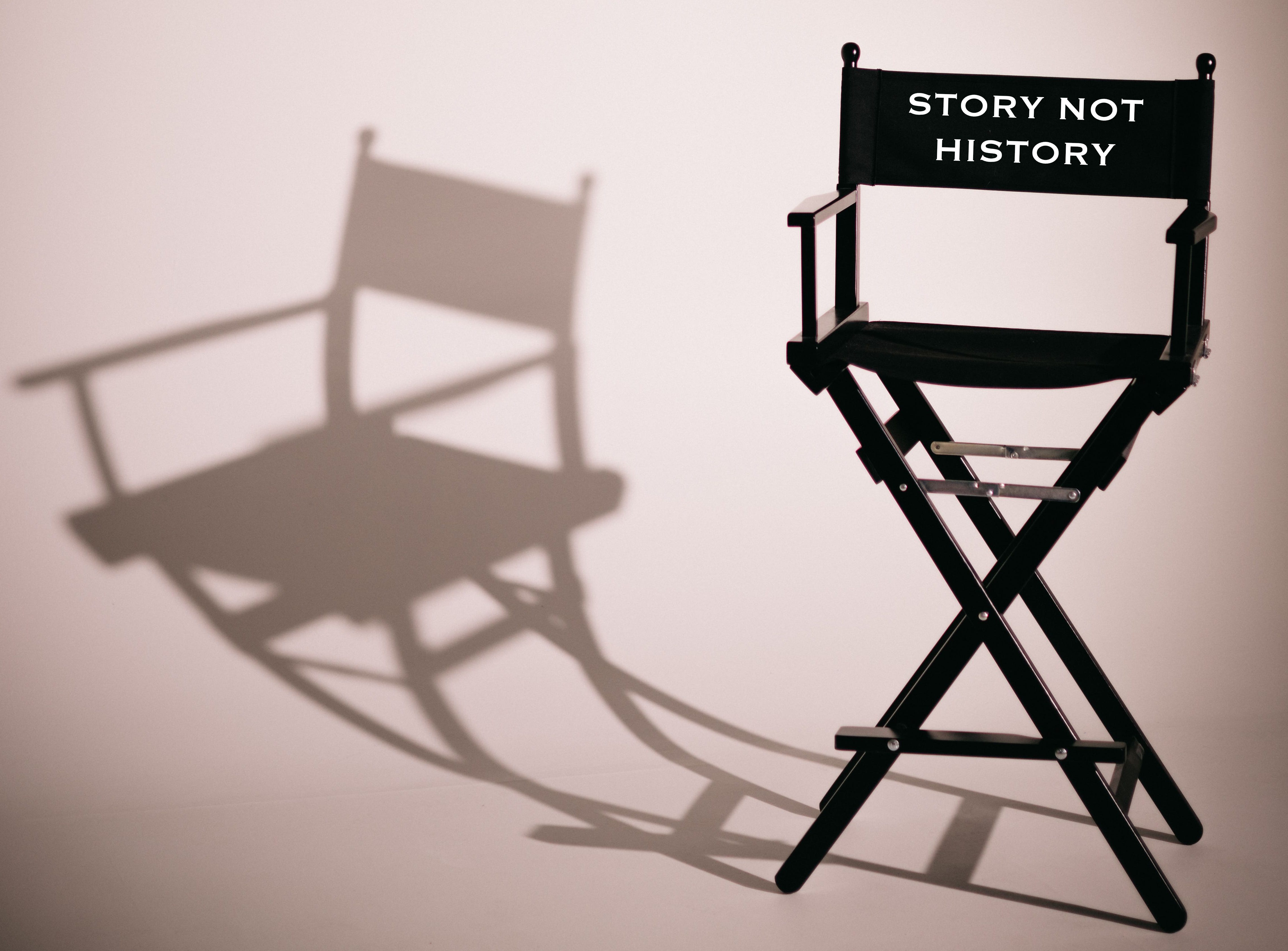
“We want historical accuracy!”
“Historical accuracy or go home!”
“That’s not the way I remember it.”
Those were just a few of the posts I’ve seen this week. Folks are angry—I mean red-faced, spit-when-they-talk angry—all because Christopher Nolan opted to make his version of The Odyssey instead of the Epcot version so many people seem to prefer.
To those people I say, “Have you ever seen a movie?”
Let’s think about this. If you demand historical accuracy, start with the language. I don’t know about you, but as an American, my grasp of Mycenaean Greek is nonexistent. Though I suppose they could use subtitles—but that would have required splitting your attention from the wonders of IMax to the little black line at the bottom.
But it isn’t just language where Hollywood takes liberties.
Hollywood loves planting images, whether they’re true or not. It has a higher calling—ROI—and we’ll get to that in a moment. But consider what a first-century Jewish man from Galilee likely looked like, then compare that with the six-foot, blond-haired, blue-eyed Jesus—who will always be Jeffrey Hunter in King of Kings to me. I don’t hear many complaints about historical accuracy there.
I also didn’t hear any complaints about William Wallace (Braveheart) being played by Mel Gibson. Talk about a glow-up. For the record, Wallace didn’t wear a kilt, the blue face paint was actually from centuries earlier, and the romance with Princess Isabella was a complete fabrication. She was nine years old and living in France during the time of the film. Wallace and Isabella never met.
Oh, and the main catalyst of the film, prima nocta, where English lords have the right to sleep with brides on their wedding night, that was never a thing. Seriously, most historians consider it a myth.
That’s not to say a wealthy noble never forced himself on a woman—we have enough real examples of that—but as a legally recognized “right of the first night,” prima nocta is historically unsupported.
Quick test.
Did Al Capone take a baseball bat to three men at a banquet held in their honor? Well, if you’ve been paying attention and know Hollywood would never let historical inaccuracy stand in the way of a good story, then you already know the answer…
Capone had three men killed—shot—and their bodies dumped near Hammond, Indiana. While the Brian De Palma version was cinematic, historians doubt a baseball bat was ever involved. Yet again, there weren’t many cries for historical accuracy because most audiences understood they were watching Brian De Palma’s version of events.
And no matter how much the film says this is based on a true story, it’s still fictionalized because real life isn’t as clean as film.
Every film, historic or not, must make thousands of choices.
Which language?
Accent?
Whose faces?
Which parts do we keep because the audience already believes them?
Since film is a business, cost and return on investment are always considerations.
Would audiences be as thrilled with another mobster taking two to the back of the head or would a trailer moment of Robert De Niro swinging a bat like Babe Ruth at an overripe melon be more likely to draw people into the theater?
Hollywood writers are not the only folks to play loose with history. Many of us, myself included, remember history based on the stories of Shakespeare. Forgetting, of course, that Bill wasn’t writing textbooks; he was creating great theater.
Caesar almost certainly didn’t say, “Et tu, Brute?” Ancient historians argue if he said anything.
Mark Antony did not say, “Cry ‘Havoc!’ and let slip the dogs of war.” Cool line though.
Hollywood didn’t invent a tradition so much as inherit one.
Expecting storytellers to toe the historic line is a rube’s game. And folks only play it when the story doesn’t match their expectations. Movies don’t exist to preserve the past. I don’t want to watch Mycenaean Greek spoken or ordinary people with bad teeth. When I pay my $15 ($8 if it’s Tuesday night) I want to be entertained by a team taking thousands of messy and unrelated facts and putting them into a coherent narrative. I don’t really want perfect historical accuracy; I want a good story that knows it’s a story.
If I want artifacts, I’ll go to a museum.
If I want history, I’ll read Bill Bryson.
When I buy a movie ticket, I’m paying to watch thousands of scattered bits woven into two (or three) hours that make me laugh, think, or forget to check my phone.
Just don’t pretend those two hours are “real” history.
Cold Cuts is my weekly column about culture, memory, technology, and the everyday absurdities we’ve somehow agreed to live with. Subscribe if you’ve also suspected that normal life has some explaining to do.
~Tony