

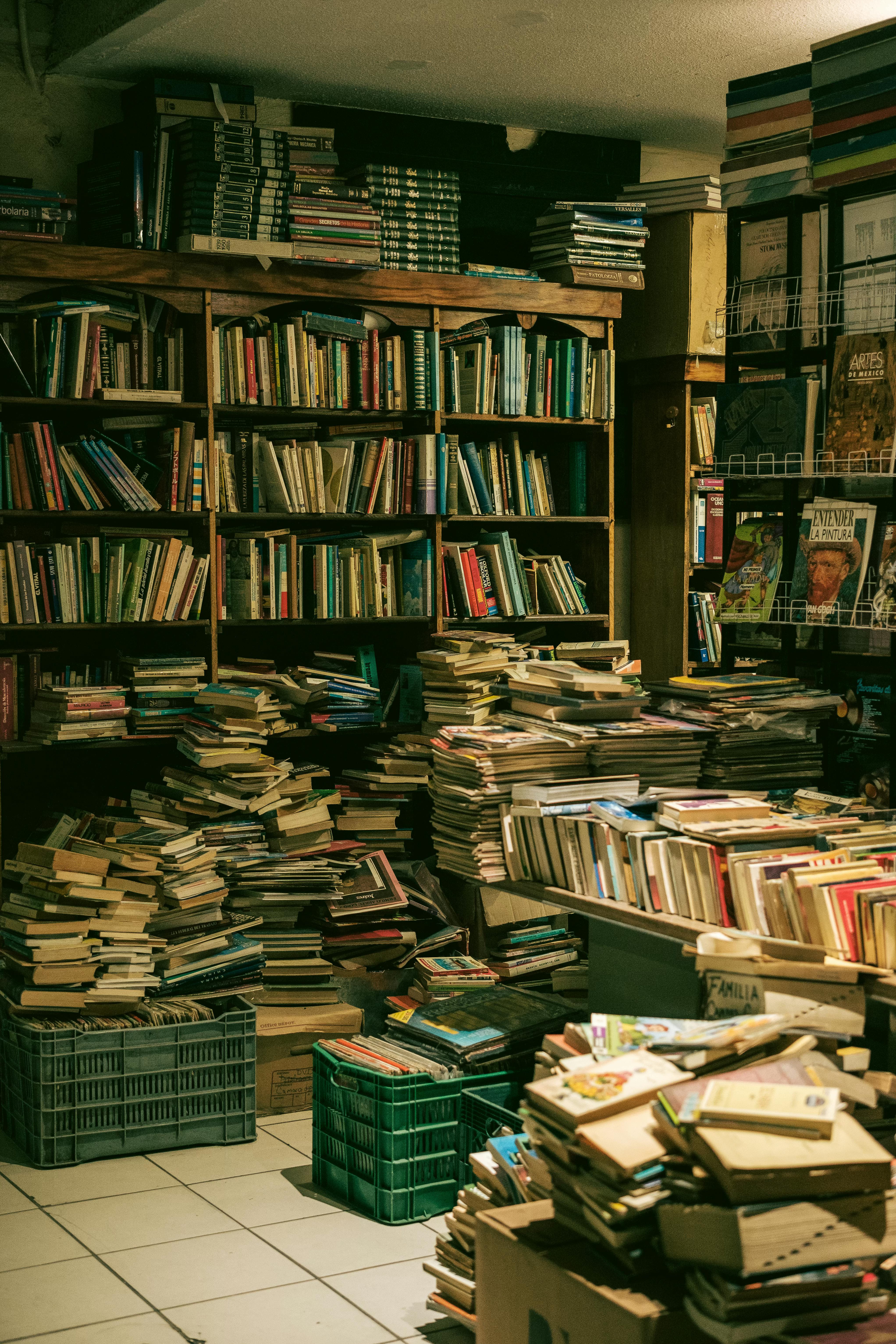
There’s something quietly funny about the fact that we built an entire digital ecosystem—devices, apps, subscriptions, audiobooks read by celebrities with voices smoother than bourbon—and then, as a society, collectively said:
“Yeah… I’ll take the paperback.”
According to Pew Research Center, most Americans are still reading. Which is reassuring, considering how often it feels like we’re all skimming life at bumper-sticker speed. What’s more interesting, to me, is how they’re doing it.
Print didn’t lose.
It didn’t even stumble.
We gave ourselves options:
• Carry 1,000 books in your pocket
• Listen while you drive, walk, or pretend to exercise
• Sync across devices like a productivity wizard
And yet, most people still reach for something that:
• has weight
• takes up space
• and cannot, under any circumstances, update itself
That should tell us (and the techbros) something…
We’ve been told—repeatedly—that convenience wins. That the smoother, faster, more optimized version of a thing will eventually replace the original.
Sometimes it does.
And sometimes… it doesn’t.
Because reading isn’t just consumption. It’s an experience—and not all experiences benefit from being optimized, digitized, and productized into something efficient but hollow.
A paperback doesn’t ping you.
It doesn’t recommend something else mid-sentence.
It doesn’t quietly pull you into three other apps before you finish a paragraph.
It just sits there.
Patient. Slightly judgmental.
Waiting for you to come back.
Even audiobooks—arguably the most “modern” form—haven’t replaced anything. They’ve just become another lane. Useful, flexible, great for long drives and ignoring the dude who wants to tell you about his weekend in the Keys (again).
But they didn’t kill print.
They joined it.
And maybe that’s the real story here—not that technology failed to replace books, but that it couldn’t fully replace the kind of attention books require.
We keep building better ways to read.
And then, when it actually counts, we choose the one that asks us to slow down.
There’s probably something in that worth paying attention to.
Or at least… underlining.
—Tony
⸻
P.S. These essays are free, every week—but subscribing helps keep them coming (and occasionally funds the coffee that powers them).
Source: https://www.pewresearch.org/?p=298755
Photo credit: Alex Quezada: https://www.pexels.com/photo/a-room-full-of-books-and-stacks-of-books-27938545/