
The Long Walk: Corporate Edition (or, Why Return to Office Feels Longer Than It Should)
On return-to-office, invisible friction, and why work sometimes feels longer than it actually is.

Listen on Spotify
For those who haven’t read The Long Walk by Stephen King, it’s about a group of boys forced to keep moving at a steady pace. No stopping. No slowing down. Keep going or you’re out—which, in this case, means a bullet to the head.
It’s not really about distance. It’s about what happens when you keep going long after it stops making sense.
This is not that.
But also… it kind of is.
There was a time when walking to the break room meant exactly that. You stood up, walked down the hall, got your coffee, and came back. That was the whole story. Simple. Clean. Civilized.
Now it feels like a continuation of something that started much earlier… and for reasons no one can quite explain without using words like alignment and visibility.
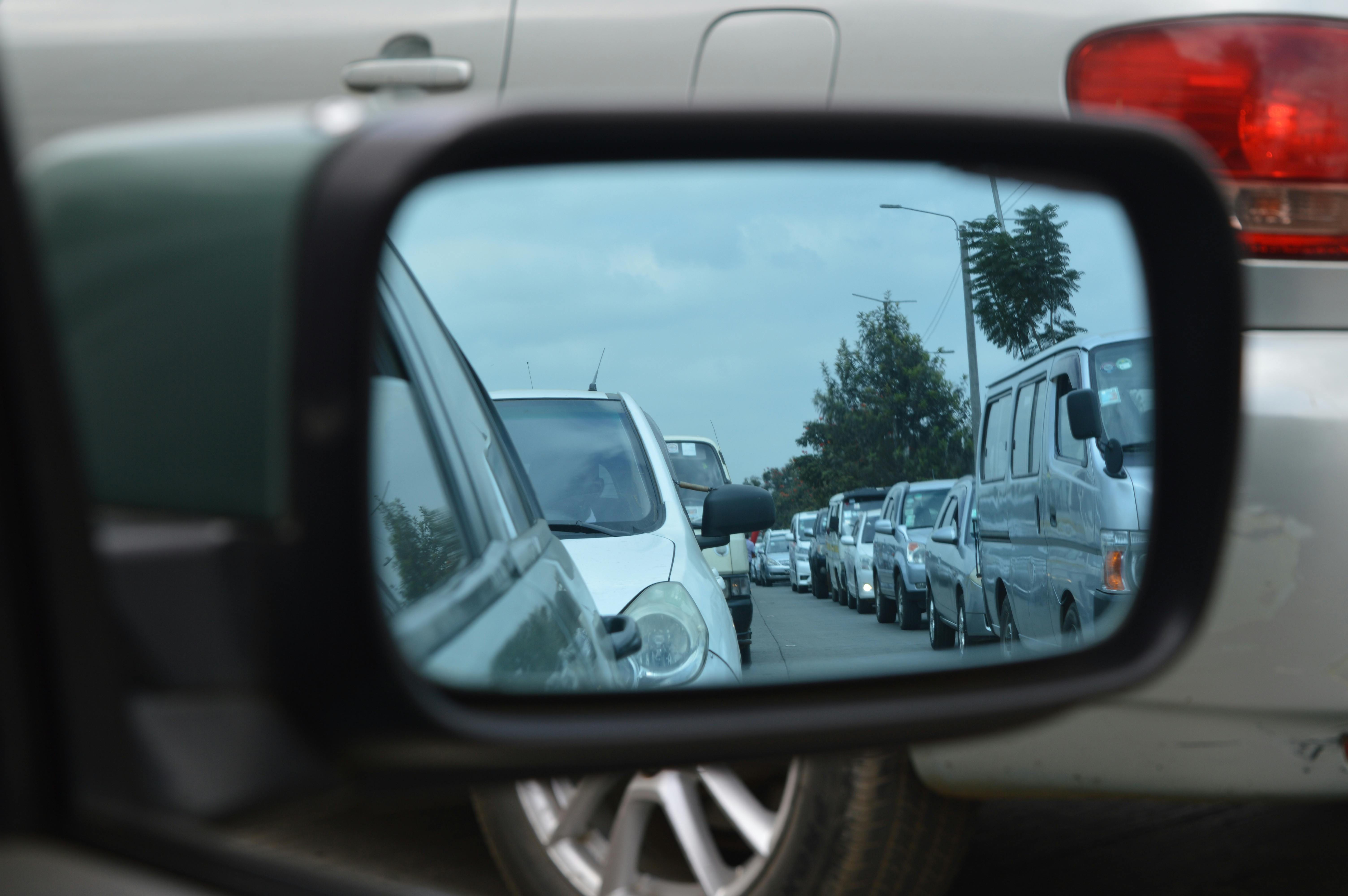
Because the walk doesn’t start at your desk anymore. It starts with the alarm clock. It starts with traffic. It starts with tolls and gas prices that feel like they were set by someone who hasn’t driven in years. It starts in a parking lot designed by a man who believed, deeply, that you should start out your morning with distance and a low-level obstacle course.
It starts with carrying a laptop into a building so you can open it… to join a call… that could have happened anywhere with Wi-Fi and a halfway decent cup of coffee.
By the time you get to your desk, you’ve already done a day’s work. And none of it counts.
We didn’t come back to work. We were already working. Pretty well, in most cases.
We came back to the appearance of work.
You drive somewhere to open the same laptop you use at home. You sit in a different chair to join the same meeting. You nod at people in person… and then message them a few minutes later on Teams because that’s still how anything actually gets done.
There’s a rhythm to it. Not a good one. Just a familiar one. Everyone in the same building, performing the same routine, quietly agreeing this part matters more than the part where anything actually happens.
And then, at some point, you need coffee. Or a Sprite Zero. Or a bag of chips you didn’t want until you realized you had to walk to get it.
So you make the walk.
The break room isn’t far. A hallway. A turn. Another hallway. A couple of minutes. But distance changes when it’s attached to everything that came before it.
Because this walk didn’t start at your cubicle. It started in your driveway. In traffic. Somewhere around the moment you realized you were going somewhere to do something you could already do perfectly well right where you were.
So the walk feels longer than it is. Not physically. But in a way that’s hard to measure and easy to feel.
None of this is hard. That’s the interesting part. If it were hard, you could complain about it. If it hurt, you could point to it.
But it doesn’t.
It’s friction. Small. Constant. Unnecessary. A pebble in your shoe. The kind of friction that doesn’t break you—just slows you down a little. Adds weight to things that used to feel light. Turns a normal Tuesday into something more complicated than it needs to be.
To be fair, there is value in being together. Some conversations don’t happen on a screen. Some ideas only show up because someone said something offhand and someone else catches it. There is a version of the culture that actually requires proximity. That part is real.
But so is the other part. The commute. The cost. The lost time. The unspoken understanding that we’re all gathered here to prove something that didn’t need proving. So you make the walk. You get your coffee. You come back. You sit down. You open your laptop.
And everything looks exactly the same as it did at home. Same screen. Same meeting. Same work.
Just… better lighting and worse coffee.
Maybe the problem isn’t the walk. The walk is fine. People have been walking to get coffee for a long time.
Maybe the problem is realizing we didn’t return to the office.
We returned to the performance of work.
And like most performances, it looks convincing from a distance. Up close, you start to notice things. The set pieces. The reused lines. The parts where everyone knows what’s happening… but keeps going anyway.
Because in this version of The Long Walk, you don’t get eliminated for stopping.
You just get noticed.
And that’s worse.
If you’ve been reading along and enjoying these essays, consider upgrading to a paid subscription. No pressure—it just helps keep the essays showing up each week.
Tony
Photo by Stan: https://www.pexels.com/photo/car-side-mirror-showing-heavy-traffic-191842/