Everything in Florida Wants to Kill You
That's Why I Live in Georgia
I grew up in the suburban-ish section of New Jersey. By the time I was 15 I could get anywhere in the state by bus and train. By 16 I could navigate all of Manhattan via ferry and subway. I knew things.
Keep your wallet in your front pocket.
Don’t get on an empty subway car.
Never make eye contact with a guy yelling at invisible people — even if he is making a really good point.
These skills served me well; I never had any seriously dangerous encounters — except one time when I ignored the Penn Station hustler who was actually a bus employee trying to let me know my gate had changed.
I felt pretty confident and streetwise.
When my eldest daughter was born, my wife and I moved to the never-ending summer of Ocala, Florida, from the Arctic tundra of Omaha, Nebraska.
This is where I would learn that street-smart doesn’t equal Florida Smart.
Florida men and women may do crazy things because it is Tuesday, but they aren’t the main threat.
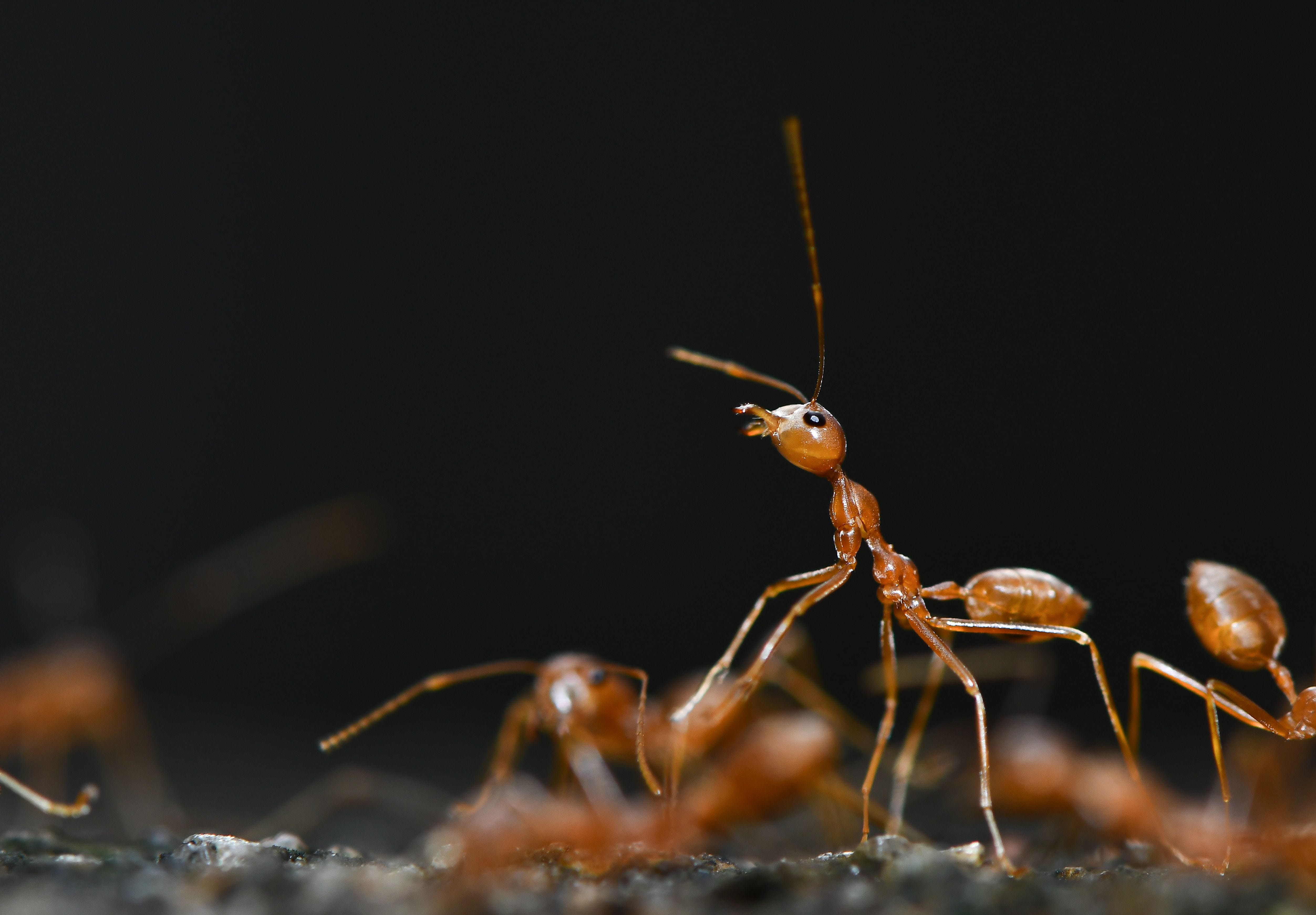
In Florida, the grass is hostile. There are snakes and prehistoric land lizards. But even those don’t rise to the level of sheer feral animosity packed into a space not much longer than a fingernail. I’m talking about tiny, angry ants who consider attempted murder a positive personality trait.
Snakes are generally polite enough to announce themselves. Terrifying but polite. Alligators aren’t bright enough to hide and hurricanes usually give a few days’ notice.
Fire ants skip all that.
One peaceful afternoon, I was relaxing in the yard of the house my wife and I rented. She was at work, and I was on child watch until she got home. Morgan was playing in her wading pool and I was enjoying a cigarette. Which, yes, dates this sometime between the Clinton Administration and the invention of common sense — when I noticed a little dot, the color of hell, crawling across the filter.
Eventually, my daughter started fussing, so I stood to bring her inside.
While walking across the patio, something stung my toe with the force of an enraged hornet. When I looked down, nothing.
By the time I set Morgan down, my foot throbbed like a cartoon thumb after getting whacked with a ball-peen hammer. My face felt flushed, and I couldn’t blink my eyes. The mirror confirmed my worst fears. My face had taken on blowfish proportions.
My eyes were swelling shut and I had no idea what was happening. For all I knew, this was some obscure Florida disease that only affected Northerners. I did what any man would do in this situation: I called my wife.
“Honey,” I said, while my face slowly morphed into the Toxic Avenger, “you may want to come home before I explode.”
The doctor at the urgent care said, euphemistically, I was having “a reaction” to a bite from a fire ant.
A reaction. A reaction?
A reaction is when someone jumps out of a closet and shouts “Booga Booga” and you wet yourself.
This was a full-on overreaction by my immune system to fire ant venom. Apparently not anaphylaxis, but close enough to notify next of kin.
I later learned that a fire ant doesn’t simply sting you. Oh no—that would be far too mundane. Instead, the little psychopath first clamps onto your skin with its jaws. Then it curls its abdomen underneath and stings repeatedly, sometimes pivoting around the bite and leaving a neat little semicircle of wounds. Like any good hitman, it likes to make sure the job is finished.
A typical colony can contain tens of thousands of workers. Larger ones contain several hundred thousand. In heavily infested areas, there may be 10 to 30 million fire ants per acre.
One had nearly closed my airway, and Florida apparently ordered them in bulk.
Scientists insist every creature, no matter how small, has a purpose. Bees pollinate, earthworms enrich the soil, ladybugs eat aphids.
Fire ants appear to exist solely to remind us that nature is full of terrors that can kill you just for sport.
Thirty years later, I still don’t have a better explanation.
Cold Cuts is my weekly column about culture, memory, technology, and the everyday absurdities we’ve somehow agreed to live with. Subscribe if you’ve also suspected that normal life has some explaining to do.
Tony