
Debtors’ Prison, But With Towels

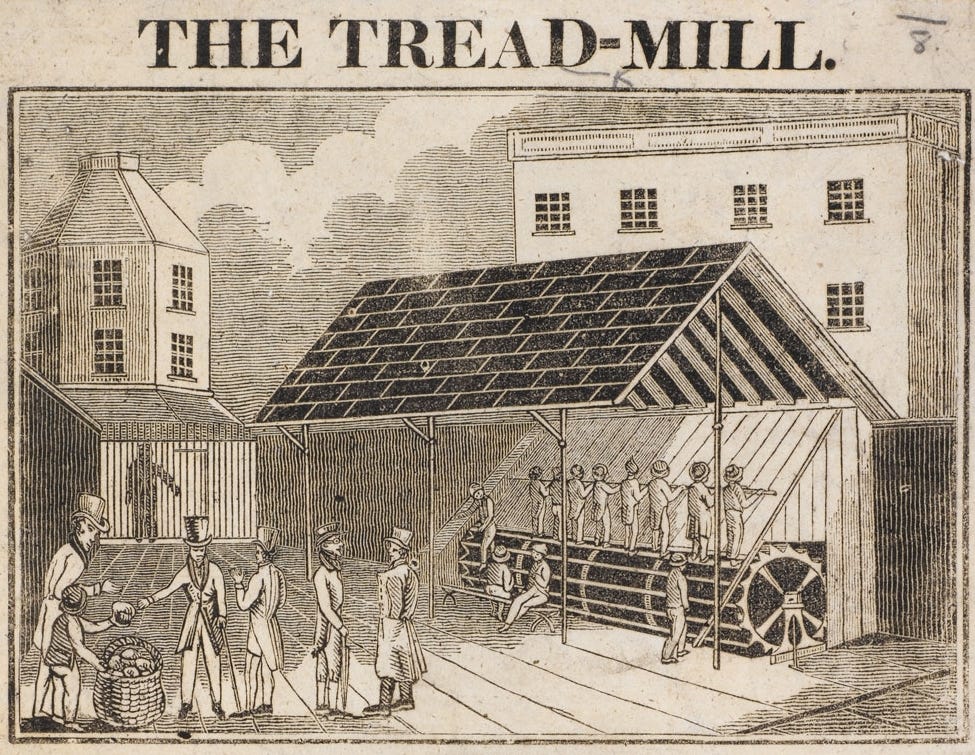
(This used to be punishment. Now we pay a fee to use it.)
Listen to the episode:
If you’ve been reading along and enjoying these essays, consider upgrading to a paid subscription. No pressure—it just helps keep the essays showing up each week.
There’s a machine at the gym designed to simulate walking.
Not enhance it. Not improve it. Simulate it.
You get on, you start moving, and after 30 minutes of effort, you look down and realize you have gone… nowhere. Which, historically, was considered a problem.
The treadmill didn’t start as a fitness tool. It started as punishment. Prisoners were put on early versions of it—giant wooden wheels—and made to walk for hours. It was described, at the time, as “grueling” and “spirit-breaking.”
Now it has cup holders.
We took something once used to discipline criminals and turned it into something Chad from accounting does between meetings. “Gonna hop on the punishment device for a quick 25 before my 1:00 with finance.”
The worst part is that Chad’s not wrong.
The treadmill works. You sweat. Your heart rate goes up. Your watch gives you a small digital thumbs-up like you’re a Labrador who figured out how to sit. But there’s something a little off putting about the whole arrangement. We’ve built an entire industry around recreating movement… that used to just happen.
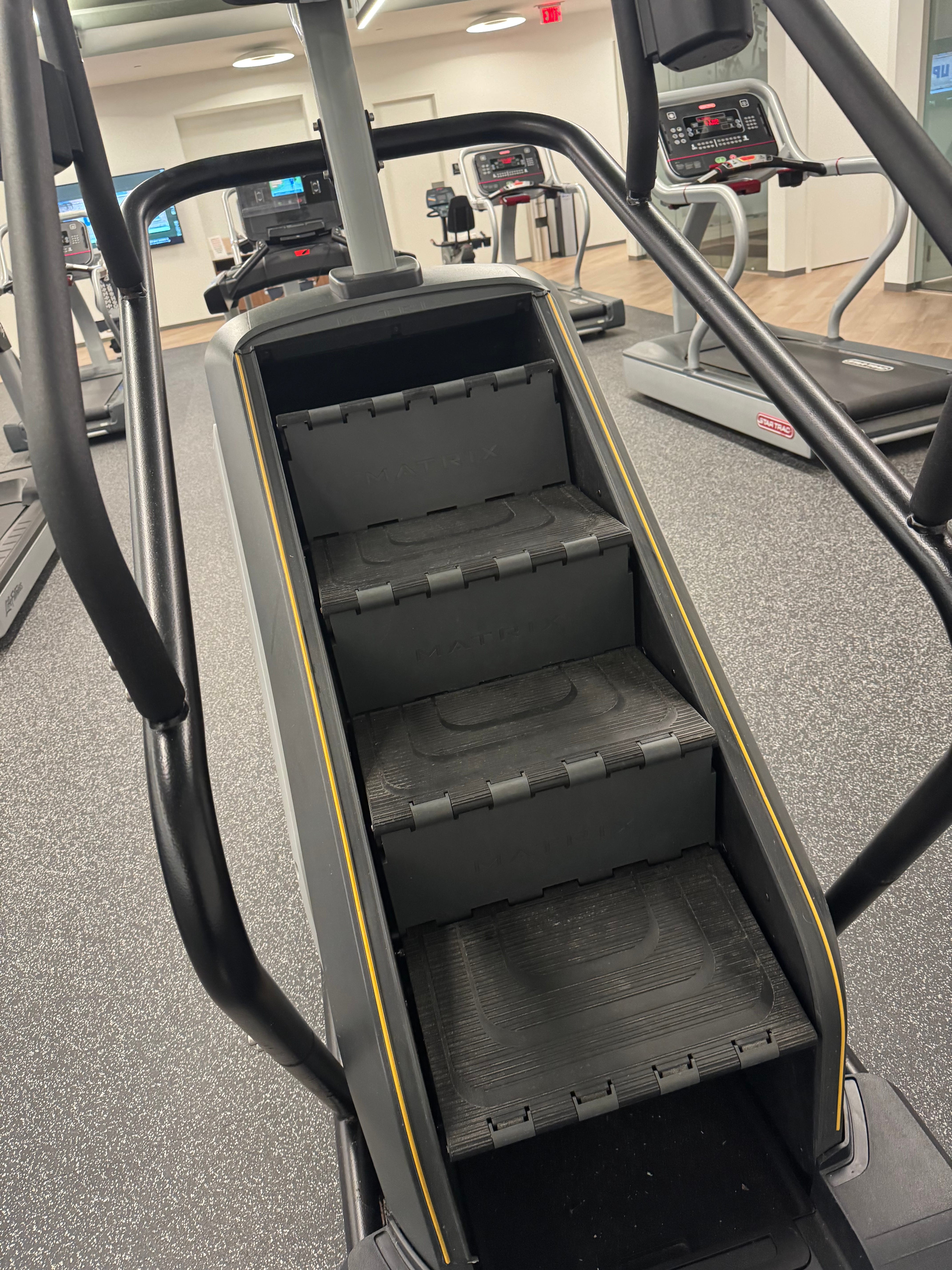
(Corporate wants you to find the difference between this picture and the treadmill above.)
Take the Stairmaster.
This is a machine that gives you an endless set of stairs. No building. No destination. No reason. Just step after step after step like you’re being gently punished for a debt you don’t remember incurring. It’s the Long Walk again. There’s no top. No moment where you push open a door and get a breeze and maybe a decent view.
Just… more stairs.
Somewhere, a Victorian guy from 1890 who got locked up for unpaid taxes is watching this and thinking, I knew it. I knew they’d make you pay for it someday.
And then there’s the elliptical. Which feels like walking, but smoother. Too smooth. Like your body is buffering. You’re moving, technically, but you’re not entirely sure what kind of moving it is. Running without impact. Walking without commitment. It’s the LaCroix of exercise. Technically there, but spiritually questionable.
Here’s the weird part—
We probably don’t need most of this.
Not the optimized incline percentages. Not the heart rate zones broken down like we’re preparing for a NASA launch. Not a watch to confirm we are, in fact, alive and mildly exerting ourselves.
We just need to move more than we sit.
That’s it. Or it used to be.
Back in the day, strength training looked like this:
A pole and two cinder blocks. Maybe a tire if someone in the neighborhood had recently made a series of poor decisions.
You picked it up. Or you didn’t.
That was the entire data set.
No one tracked your zone. No one asked if you were optimizing your posterior chain. If you lifted it, you were strong enough. If you didn’t, you had some work to do. Too easy? Add some more blocks.
Movement wasn’t scheduled. It was just part of living.
You walked because you had somewhere to go.
You carried things because they needed carrying.
You got stronger by accident.
Now we isolate movement like it’s a lab experiment. We schedule it, measure it, upload it. Then we review it like game film.
“Let’s take a look at that 12:17 incline decision. I think you left some effort on the table there.”
And again—this all works. That’s what makes it tricky. Chad and Jennifer are doing exactly what they’re supposed to do. They’re consistent. They’re disciplined. They have shoes engineered by people who probably also design astronaut boots.
They are doing everything right.
They are also walking very hard… to nowhere.
At some point, the tools stopped helping and started replacing.
Walking outside became walking inside on a moving belt.
Lifting things turned into lifting very specific versions of things that don’t exist anywhere else in the world.
The randomness got engineered out and replaced with something smooth, controlled, repeatable.
Old movement had friction. Uneven ground. Awkward weight.
New movement is efficient. Predictable. Clean.
Also a little… detached.
The body doesn’t care if the weight is a kettlebell or a sack of feed. It doesn’t care if you’re on a treadmill or late for something important.
Movement is movement. Your heart will beat either way.
And no, this isn’t an argument against the gym. I go. I use the machines. I have walked miles on a device that would leave my grandfather scratching his head. This is more of an observation.
Somewhere along the way, we took a basic human activity—move your body—and turned it into something that requires special shoes, a dedicated outfit, and a monthly fee.
We removed it from life… then built a room to put it back in.
Which is how we ended up here—
Standing in place.
Climbing nowhere.
Walking very hard… just to get back to where we started.
Makes you wonder what else we pulled out of life… just so we could sell it back to ourselves.
If you’ve been reading along and enjoying these essays, consider upgrading to a paid subscription. No pressure—it just helps keep the essays showing up each week.
Tony